Ghostlier Demarcations at the World-Edge of Discovery
Wallace Stevens, Mark Strand, and the Rage for Order in Manila Bay

—Christopher Scott Carson
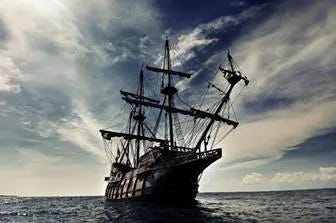
The voyage from the Philippine Islands to America can be called the longest and most terrible of all in the world, because of the immense ocean to cross, which is almost half the globe, with the wind always against it, and the incredible and terrible storms that occur there.
–Giovanni Francesco Gemelli Careri, 1698
We sweat, and plead to be released / Into the coming day on time – Mark Strand
The Black Ship comes into Manila Bay at the high noon of an afternoon in 1565, its canvas blackened by the long Pacific crossing, and the Augustinian at the prow, the friar I will call Angelo, stands immobile by a heat as thick as fire; the sun is directly overhead and strokes the brows of the sailors with more fever rather than warmth, and the bay opens before them flat and bright and indifferent, the way the sea is always indifferent to the men who think they have crossed it. On the pier a young woman waits with a small crucifix lying against her breast, half in conversation with a Spanish trader and half turned toward the ship, and when her eyes find the friar they carry recognition and distraction at once, as though she had been expecting someone and forgotten whom. I have given Abby Alonzo a name she would not have owned and a century she could not have entered, and I will answer for the anachronism before the end.[1]
I begin with a ship because poetry is a science of arrivals, and arrivals are always freighted, albeit with golden fire, and usually late. Vessels carry the relics of a past and the cargoes of a future and dock, when they dock, in harbors that have changed since the manifest was drawn. Poems do the same. Wallace Stevens and Mark Strand are voyagers of this kind, and their hulls cross the same water: flux, appearance, the salt indifference of the deep, and the oldest of human appetites, the appetite to lay a human-style order upon what will not hold one. One of these two men believed the appetite could be satisfied, at least for the length of a poem, and built out of that belief some of the most beautiful artifice in the language. The other watched the appetite fail, watched it fail completely and on purpose, and found in the wreckage a thing the satisfied man never saw.
The men on the Black Ship had crossed the largest emptiness on the face of the earth, the Pacific that Magellan’s survivors had named the peaceful sea in bitter irony, and they had crossed it by an act of order laid upon chaos, the chart and the cross-staff and the dead reckoning that turn a trackless waste into a route a man can follow home. Discovery is the rage for order in its noblest dress, the human refusal to grant that the unknown is finally unknowable, and there is a friar at the prow of every great voyage because the deepest of the discoveries the age was making, beneath the islands and the trade winds and the silver, was a discovery about whether the order the navigators trusted ran all the way down or stopped at the waterline of the human mind. That is the question Stevens and Strand are still asking four centuries later, in a smaller boat, with the friar’s crucifix traded for a fountain pen. Whether the order is found or only made. Whether the chart answers to a real coastline or invents one out of the fear of having none. Everything follows from the answer, including, in the end, Miss Alonzo on the pier.
A word on method, since what follows will not stay decently inside the walls of literary criticism, and I would rather confess the trespass than be caught in it. Emily Dickinson set the rule I mean to keep. Tell all the truth but tell it slant. There is a truth at the floor of this essay, and it is a plainer and more personal truth than an essay on two American poets has any business carrying, and I would rather the reader come upon it himself, late, the way the light comes up over a bay before anyone on the pier has decided to call it morning. So I will circle. I will be unfair to one poet and tender toward another and will try to earn both, and the woman on the pier will wait, as women on piers have always waited, until the ship is close enough to name.
The Rage for Order
Let us begin where honesty requires, which is with Stevens at his full height, because a case against a great poet that does not first concede his greatness is only envy with footnotes. The Idea of Order at Key West is one of the supreme lyric performances of the century.[2] A woman walks by the sea at evening and sings, and the sea, which is mere recurrence, mere grinding water that means nothing and intends nothing, becomes under her voice a made thing, a world. She is the only maker of the world her song brings into being. When the singing stops and the listeners turn back toward the town, the small human lights of the fishing boats at anchor take the night in hand and parcel out the dark water into something a man can bear to look at. The poem ends in what may be the most quoted prayer of modern unbelief, the blessed rage for order, the maker’s rage to set words upon the sea and upon our own origins, in demarcations that grow ghostlier and sounds that grow keener as the order is imposed and known at the same instant to be imposed. There are no fates but ours, no souls but captains.
The title phrase I have borrowed for this essay sits at the exact hinge of that poem and tells, if we will listen, the whole of its secret. As the singer’s order is laid upon the water, the demarcations she draws grow ghostlier and the sounds keener, and the ghostliness is the tell. The lines of the made world go spectral in the very act of being drawn, thinning toward transparency as they are imposed, because they are imposed and rest on nothing underneath them; and the keener the human sound that draws them, the more plainly one hears, beneath the music, the silence it is being sung against. Stevens knew this perfectly. He was the most honest of the modern unbelievers, and he wrote the ghost into the line on purpose. The one thing he would not do was ask why a demarcation with nothing under it should haunt us in the manner of a ghost, which is to say with the particular grief of something that was once alive, and has died, and is still owed a home.
This is the whole of Stevens in a single gesture, and it is magnificent, and we should say so without flinching. The imagination is the last god left standing after the death of the first, and its office is to confer an order that the world does not contain and cannot supply. Stevens is the great celebrant of that office and its most scrupulous theologian, for he never once pretends the order is anything other than human. He is too honest for that, and his honesty is precisely what makes him dangerous to the rest of us, because the position he holds is the most beautiful a man can hold without God, and beauty (as Aquinas might have said in his Fourth Way to God) is the most persuasive of all the arguments, persuasive far past the reach of its evidence.
The rage is not confined to Key West; it is the through-line of the whole achievement. In Harmonium he sets a jar upon a hill in Tennessee and watches the slovenly wilderness rise up around it and surrender, the gray and bare vessel taking dominion everywhere by the sheer fact of its made and human shape, which is the rage for order reduced to a parable and left standing out in a field. In the same book he gives us its terrible complement, the listener with a mind of winter who has been cold so long that he beholds the bare place and is nothing himself, and regards the nothing that is not there and the nothing that is. Between those two poems the entire Stevensian universe is stretched taut: the jar that orders the void by an act of will, and the snow man who is the void looking back, and nothing whatever between them but the trembling human imagination, which must either impose a pattern or confess the abyss, there being, the poet insists to the last, no third thing and no one above to supply one. Stevens is brave or nothing at all.
The creed beneath the artifice he stated earlier and more nakedly, in Sunday Morning, where a woman in loose negligee (“peignoir”) keeps a private sabbath over coffee and oranges and declines the summons of the old religion, and the poem argues, with a serene and devastating tenderness, that a deathless paradise would be insipid, that ripeness and beauty depend wholly upon their passing, that the boughs of heaven, hung with unfailing fruit, would be a horror, and that death is the mother of beauty.[3] There is Stevens’ whole theology. Order and loveliness are mortal and are lovelier for being mortal; the petal is beautiful in the instant of its falling and because of it. This is the cherry blossom in the temple garden at Kyoto, the whole of the Japanese sense of mono no aware, the ache that attends perishing things, transposed into an American key and a Protestant apostate’s candor. The final belief, Stevens wrote elsewhere, is to believe in a fiction, which one knows to be a fiction, there being nothing else. He believed it and he made it sing.
And yet. The twentieth century was the century of the rage for order, and the rage did not confine itself to lecture halls and seaside evenings. The same will that would lay a beautiful human pattern upon a recalcitrant sea was abroad in the world laying patterns upon recalcitrant peoples, and where the sea merely shrugged the peoples bled. The aesthete who orders the water and the commissar who orders the kulaks and the ideologue who orders a continent into camps are not the same man, and I will not insult the reader by pretending they are. But they are cousins. They share a grammar and a vacancy, the same hollow in the shape of the God who has been declared dead and whose vacated throne the human will now proposes to occupy. A century that decided meaning was a thing men make rather than a thing men receive spent the following decades discovering, at enormous cost, exactly what kinds of meaning men will make when they are persuaded there is no other kind.
Stevens’s most famous poem, too, turns at its midpoint toward explanation. After the singer’s voice ceases, the speaker appeals to Ramón Fernández:
“Tell me, if you know,
Why, when the singing ended and we turned toward the town,
Tell why the glassy lights, the lights of the fishing boats at anchor,
Mastered the night and portioned out the sea.”
Here the poem hands us its own indictment, unbidden, and this is the detail on which the whole of my case against Stevens turns. The singer is gone and the lights are mastering the “enchanting” night, and the speaker turns to a companion and asks him to explain why, and he names the man: Ramon Fernandez. Stevens swore to the end that he had chosen the name at random, two common Spanish names set side by side, pointing at no living person.[4] Grant him the disclaimer. The accident is more damning than any intention could have been. For there was a Ramón Fernández, a critic of real distinction in the Nouvelle Revue Française, a man who took the intellectual’s rage for order to its political terminus and ended a fascist, a creature of Doriot’s party, a collaborator who lent his fine mind to the project of portioning out a continent and by consequence the Jewish people the way the singer portioned out the sea. The poem reached into the dark for a critic to rationalize the imposition of order and pulled up, by chance, the precise face that the rage for order would wear when it climbed down off the page and went looking for a country to discipline. Stevens summoned his own century’s nightmare and gave it a name and did not know what he had done.
Stevens himself was no Fernandez, and fairness requires the distinction be made firmly and at once. He was a Hartford insurance man, a conservative of the cautious and premium-paying sort, a citizen who committed no treason graver than a few politically incorrect opinions held privately and a drunken swing at Hemingway on a Key West evening that broke the poet’s own hand against the novelist’s jaw. The point is not that the aesthete becomes the fascist. The point is that the two grow from one root, the conviction that order is a thing the strong imagination confers upon a chaos that owns no order of its own and answers to nothing above it; and the age that raised that conviction to a first principle produced, alongside its loveliest lyrics, a Pound broadcasting for Mussolini and an intelligentsia across half a continent that talked itself, elegant sentence by elegant sentence, into the camps. The little poem that asks Fernandez to explain the harbor lights is a small and beautiful instance of a very large and very bloody century-long error about where order comes from:
“Oh! Blessed rage for order, pale Ramon,
The maker’s rage to order words of the sea,
Words of the fragrant portals, dimly-starred,
And of ourselves and of our origins,
In ghostlier demarcations, keener sounds.”
De futilitate, C. S. Lewis called the doctrine that the cosmos is finally and totally without meaning, and he made against it the reply that has never been answered.[5] A man cannot pronounce the whole of reality futile without standing, as he pronounces it, upon some small patch of ground that is not futile, namely the standard of value by which he finds the rest wanting; and that standard he must have carried in from somewhere his own doctrine insists does not exist. The judgment of universal futility refutes itself in the act of being made. Stevens’s lovely godless order, like that of Richard Rorty or Albert Camus, is built upon exactly such a smuggled patch, the imported conviction that order is worth making and beauty worth grieving, and the poem cannot say where the conviction came from, because to say would be to give the whole game away. The rage for order is a rage for something. The something has a name. Stevens spent a long and luminous career not saying it.
He Flipped the Script
Mark Strand answers Stevens, and the answer is the more complete for not being a rebuttal. Strand was the most Stevensian of the poets who came after, the apparent legatee, the man who had learned the master’s music of absence note for note and could play the empty field and the vanishing self with a cold perfection all his own. He studied painting under Josef Albers before he gave himself to poems, and the canvas never left him; his verse is the most painterly and the most moonlit in modern American writing, a poetry of surfaces lit obliquely, of Winslow Homer and Edward Hopper figures alone and outdoors at night, presiding but not judging, declining always to muscle the scene into meaning. From a poet so schooled in absence one expects nihilism, and at the level of the surface one gets it.
His credentials in absence were impeccable and early. In one famous early poem he stands in a field and declares himself the absence of field, a man who is, wherever he goes, what is missing, who moves through the world to keep the world whole by the courtesy of subtracting himself from it. In another he empties himself methodically of the names of others and then of his own, turns back the clocks, says his goodbyes, and arrives at the single line that holds his whole vocation in it: he empties himself of his life, and his life remains. For the better part of thirty years he was the laureate of the void, the poet of the vanishing self and the depopulated room, and the long late sequence of Dark Harbor only deepened the practice, the self watching its own quiet evacuation with a connoisseur’s calm. All of which makes what came afterward the more astonishing, because the laureate of the void is the very man who would end by seating Death at his table as a familiar and writing the good thief into paradise. The emptying, it turned out, was never the end of the matter. It was the via negativa, and the via negativa goes somewhere.
Then, in 1998, he published Blizzard of One, and I will say with a straight face the thing I came here to say: it is the first Pulitzer of the twenty-first century, though the calendar handed it the prize in 1999 and the old century had a year of breath left in it.[6] I mean that the book turns. The long aesthetic theater of the godless century, the staged and beautiful atheisms of Stevens and the high modernists, comes in this book to look at itself in the cold and find itself, at last, futile and stultifying, an exquisite machine for producing exquisite nothing. And Strand does not argue with any of it. He is too good for argument. He lets the staged unbelief run all the way out to its own terminus, the toil among the tombs, the explorers who make landfall long after landfall could matter, the star charts that lie and the maps that lead only to the dead, and then, having let the order fail as completely as it can fail, he does the one thing his master could not. He lets the meaning back in through the floor.
For Strand the apparent nihilism is a surface and the meaning is hidden at the far end of the exploration, reachable only by going down through the ruin to get it. The sacrifice is the point. This is the via negativa with the name filed off, the long emptying that the mystics knew must come before any filling, kenosis without the creed to license it, the God approached the way the apophatic theologians approached him, by the patient subtraction of everything he is not until what remains can no longer be spoken. The drowned swimmer in the night movement of one of Strand’s late seascapes, the swimmer whose imagination has outlived his fate, is not a nihilist’s grim joke.
Strand’s “Morning, Noon, and Night” begins not with freshness or dawn promise but with wreckage. The speaker lies in bed, not rising to greet the day but waiting it out:
“…the shadow of the future fell, and on the liquid ruins
Of the sea outside, and on the shells of buildings at the water’s edge.
A rapid overcast blew in, bending trees and flattening fields.
I stayed in bed, hoping it would pass. What might have been still waited for its chance.”
Morning here is already aftermath. The sea is not promise but “liquid ruins.” The shoreline is not a beckoning horizon but “shells of buildings.” Even the weather is hostile, flattening fields, bending trees. The one hopeful note — “what might have been still waited for its chance” — feels deferred, spectral. Strand sets his voyage not at the moment of departure but after the wreck, with the sailor still in bed.
He is the soul that persists past the death of the verifiable self, adrift on a midnight water, still imagining, which is to say still reaching for the very thing the imagination was made to reach. Strand’s bleakness is the bleakness of Holy Saturday, the long grey middle day on which God is dead and sealed in the rock and the meaning is hidden and the disciples have not yet been told, and do not yet suspect, that the hiding is not the end of the story at all, but instead the hinge of it.
The painter in him belongs to the case and not beside it. Strand wrote an entire book on Edward Hopper, and the affinity was exact: the silent rooms, the figures held in a light that arrives from no visible source, the standing sense that each scene is a sacrament whose meaning is at once withheld and wholly present. A man drawn that powerfully to Hopper’s lit and waiting interiors is a man who already half believes the room is an antechamber to something, that the daylight laid across the empty bed and the woman at the window falls from somewhere and means to be remarked. The painterly Strand and the religious Strand are one man, standing before the same illuminated quiet and declining, for as long as he could manage the refusal, to say what it was the light was for.
In Strand’s second movement, the imagery of navigation comes to the fore:
“Whatever the star charts told us to watch for or the maps
Said we would find, nothing prepared us for what we discovered.
We toiled away in the shadowless depths of noon,
While an alien wind slept in the branches, and dead leaves
Turned to dust in the streets.”
The promise of discovery collapses here. Star charts and maps, the very tools of explorers, mislead. Noon is not illumination but erasure, “shadowless depths” where nothing can be grasped. The explorers discover not new lands but belatedness:
“…for to come as we had, long after it mattered, to live among tombs, great as they are,
Was to be no nearer the end, no farther from where we began.”
This is the heart of Strand’s anti-epic. Exploration becomes an arrival among ruins, the voyage itself nullified. Tombs take the place of continents; discovery is a synonym for futility, perhaps Night itself, for Strand’s final movement plunges into oppressive nocturne:
“These nights of pinks and purples vanishing, of freakish heat
That strokes our skin until we fall asleep and stray to places
We hoped would always be beyond our reach — the deeps
Where nothing flourishes, where everything that happens seems
To be for keeps. We sweat, and plead to be released
Into the coming day on time, and panic at the thought
Of never getting there and being forced to drift forgotten
On a midnight sea where every thousand years a ship is sighted, or a swan,
Or a drowned swimmer whose imagination has outlived his fate.”
Turn the two poets so they face each other and the surprise stands, like a ripe garden, fully up. The radiant poet is the unbeliever. The bleak one is the believer who has not yet been informed what he believes. Stevens makes a gorgeous order and knows it for a fiction and loves it the more for its mortality. Strand makes a ruined order and trusts, against his own stated convictions and frequently against his will, that something true and undeserved is buried at the bottom of the ruin. The first of these is aesthetics, the finest aesthetics the age produced. The second is faith, in mourning dress, with the lights off, refusing to give its right name. It is no accident that when the Brentano Quartet went looking for a poet whose voice could stand inside sacred music, they came to Strand after reading this very book, because his lines were, in the first violinist’s phrase, profound underneath. The masterpiece of absence is what opened the door to the Cross.
I have to stop here and let the other man into the room, the reader who has waited through all of this with a reasonable objection and a better claim on Strand than I have. He will say, and he will be right to say, that I have found in these poems the rosary I brought in my own pocket. Strand called himself an atheist, plainly and more than once, in interviews and to his friends, and he left no deathbed behind him for any priest to embroider. The painter who studied under Albers could render the iconography of the Cross the way he rendered a lit and waiting room, as a craftsman discharges a commission, with no more creedal stake in the Seven Last Words than an unbelieving composer holds in the Mass he is paid to set; and the Gospel of Thomas was a deliberate and clear-eyed frame, the Gnostic’s refusal of the orthodox consolation, and the man who reached for it knew exactly what he meant to refuse. The personified Death is no believer’s hope. It is a stoic’s courtesy, the oldest and bravest of the unbeliever’s manners, the way a clear-eyed man gets himself on speaking terms with the annihilation he expects and declines to pretend away. The apophatic theologians subtracted their way toward a God they had first affirmed and never doubted; Strand subtracts toward nothing he ever once affirmed, and to dignify that bare reduction with the name of the via negativa is to smuggle the destination into the journey and then profess astonishment at the arrival. The self is a temporary disturbance in an indifferent field, and when he writes that his life remains he means that matter persists coldly after him and means nothing a soul would recognize as survival. To read faith into the whole of it, the objector concludes, is the intentional fallacy in vestments, the critic leaning out over a dark well and mistaking his own reflected face for the face of God. On the surface he has the better of the argument, and I concede the surface entire.
And then I make the one answer the surface cannot make for him. The atheist reading explains the courage and explains the craft and explains everything in these poems except the single thing most plainly in them, which is one might almost say Hebraic in its celebratory tenderness. Annihilation owes a man no welcome. A stoic on honest terms with the void does not write his own Death as almost glad of him, does not usher the thief into paradise and break the reader’s composure in the ushering, does not keep a chair warm in a hall he is certain stands empty. The creed Strand professed predicts a colder poem than the one he set down in 2002, and the distance between the poem his unbelief would have written and the poem that carries his name is the whole of my evidence, and it is not a small thing, and it will not paraphrase away. In 2002, here is Strand on his own mortality, and his Death might not be so bad after all:
I am not thinking of Death, but Death is thinking of me.
He leans back in his chair, rubs his hands, strokes
His beard and says, “I’m thinking of Strand, I’m thinking
That one of these days I’ll be out back, swinging my scythe
Or holding my hourglass up to the moon, and Strand will appear
In a jacket and tie, and together under the boulevards’
Leafless trees we’ll stroll into the city of souls. And when
We get to the Great Piazza with its marble mansions, the crowd
That had been waiting there will welcome us with delirious cries,
And their tears, turned hard and cold as glass from having been
Held back so long, will fall, and clatter on the stones below.
O let it be soon. Let it be soon.”
Now I do not claim to have read the man’s soul. I claim that the work knew something the man would not put his signature to, and that the surplus, the unaccountable warmth, the recognition, the making ready, is the exact place where grace gets in around every creed a man professes and cannot finally seal against it. The intentional fallacy, in any case, cuts both ways. If I am forbidden to read the faith in from the warmth, he is forbidden to read the unbelief in from the interviews, and the poems go on sitting there beneath both our prose, warmer than either of us has been given leave to explain.
The Evidence Against Himself
With that objection honestly on the table, and conceded as far as it will go, return to the work, because the work keeps doing things the objection cannot quite account for, very often against the poet’s own conscious intention, which is the only kind of evidence in these matters worth having, because it cannot be staged. Begin with the smallest instance, since the smallest is the most telling.
In Two de Chiricos, a poem named for two canvases of the great metaphysical painter, Strand hangs “the green and yellow light of love’s domain” upon the “joylessness of fate.”[7] The line shadows Shakespeare almost syllable for syllable. It is Viola, in Twelfth Night, describing the sister who never told her love, who let concealment feed on her cheek and pined with a green and yellow melancholy, and sat like patience on a monument, smiling at grief. I once put the echo to Strand directly, and asked him whether the line had a seventeenth-century precursor he had in mind. He answered that the reference to Twelfth Night had been wholly unconscious, that he assured me of it, and that no one had ever pointed it out to him before. There is the entire argument compressed into a single exchange of letters. The tradition was writing through him faster than his unbelief could censor the line. Call it the curse of the polymath if you wish; I would sooner call it the grace of one, the deep Christian and Shakespearean substrate surfacing unbidden and unwanted in a man who had served it formal notice to quit and discovered it would not leave the premises.
Consider next the commission he could not hold at arm’s length, however hard he tried, and he tried. The Brentano String Quartet asked him to write a sequence to be read between the movements of Haydn’s setting of the Seven Last Words of Christ, and the result, Poem After the Seven Last Words, stands as the culmination of Man and Camel in 2006.[8] The professed unbeliever took the assignment as “an intellectual challenge” and armored himself for it with care; by his own program note the sequence leans heavily on the Gnostic Gospel of Thomas, which is the atheist’s garlic, the heterodox text held up at arm’s length against the orthodox claim it is meant to keep at bay. The garlic failed. The sequence is moving, which it has no earthly business being if the Gnostic distancing were doing the work it was hired to do, and the canonical word kept seeping in around the sandbags. The thief at the next cross is promised paradise that very day. In the sixth movement the dying God speaks the word of completion into an emptiness that opens only onto a larger emptiness, and somehow holds the whole of it within himself. A man who wanted nothing more than an intellectual exercise does not write the good thief into paradise and make a reader believe it. Strand made the reader believe it, against himself, which is the only direction in which a man can be made to tell the truth.
Set the late poems in a row and they read as a long and deliberate rehearsal, an Ars Moriendi composed by a man who claimed to believe there was nothing to rehearse for. Death recurs in them, and recurs not as a terror and not as a bare void but as an acquaintance of long standing, met on the stairs, greeted almost with relief, a figure who keeps a chauffeured car and a reservation at a hotel whose name is the color of distance. A man does not spend a late career drawing and redrawing the face of his own death, lending it a beard and a manner and a courteous patience, unless some part of him has quietly concluded that the face will be there to be met, that the meeting is an appointment and not an extinction. The professed atheist kept his appointment book open to a date he insisted would be blank. The poems are the entries he made in it. They are crowded, and they are not afraid, if they, like Strand, and perhaps Christ, are voyagers:
2
There is an island in the dark, a dreamt-of place
where the muttering wind shifts over the white lawns
and riffles the leaves of trees, the high trees
that are streaked with gold and line the walkways there;
and those already arrived are happy to be the silken
remains of something they were but cannot recall;
they move to the sound of stars, which is also imagined,
but who cares about that; the polished columns they see
may be no more than shafts of sunlight, but for those
who live on and on in the radiance of their remains
this is of little importance. There is an island
in the dark and you will be there, I promise you, you
shall be with me in paradise, in the single season of being,
in the place of forever, you shall find yourself. And there
the leaves will turn and never fall, there the wind
will sing and be your voice as if for the first time.[9]
Wilbur, and the Thrushes
There was another road to the country Strand reached, and a poet who walked it without a single bruise, and setting the two beside each other throws the bruises of the first into a hard and clarifying light. Richard Wilbur was a Christian from the beginning, a formalist of immaculate craft who felt no obligation to answer Stevens or any of the modern atheists, for the plain reason that he had never once stood inside their theater. Where Stevens enthroned the imagination as the last available god, Wilbur simply loved the things of this world and let them point past themselves without being asked to.
His best-known poem watches the morning wash filling with wind on a line outside a waking window, sees the bedsheets and the blouses lifted into a kind of angelic levity, and then lets the soul come heavily down out of that purity, in a difficult and unsentimental love, to accept once more the body and the daylight and the whole soiled and necessary business of being incarnate. Love calls us to the things of this world.[10]
Yet, as the sun acknowledges
With a warm look the world’s hunks and colors,
The soul descends once more in bitter love
To accept the waking body, saying now
In a changed voice as the man yawns and rises,
“Bring them down from their ruddy gallows;
Let there be clean linen for the backs of thieves;
Let lovers go fresh and sweet to be undone,
And the heaviest nuns walk in a pure floating
Of dark habits,
keeping their difficult balance.”
It is the sacramental vision stated without apology and without argument, because for Wilbur there was nothing in it to argue. A dear friend of mine, Professor R.A. Benthall, corresponded with Wilbur for years, and I once asked him what the two of them found to say to each other across all that paper, expecting prosody, or theology, or some lament for the state of the art. “We talk about thrushes,” he said. Of course they did. A man who begins his life inside the sacrament does not spend his afternoons arguing for the sacrament; he watches birds, because the birds are the argument, complete and singing and in no need of a single syllable of defense.
There is a deeper reason Wilbur never raged, and it sits oddly against the usual portrait of the genteel formalist. He had seen the disorder the century was capable of at far closer range than Stevens ever did, as a combat infantryman in Italy and France, in the rubble below Cassino and along the German lines, and he came home from it with a vocation for form, the strict and courteous stanza held up as a stay against the chaos he had watched men make of the world. For Wilbur the metrical line was a humility, never a conquest, a way of submitting the imagination to a measure outside itself instead of imposing a measure of its own upon the void. That is the believing man’s relation to order, and it is the exact inverse of the Stevensian one. The unbeliever orders the sea because there is no order in it and none above it, and his rage is at bottom a kind of grief. The believer orders his line because there is an order above it that the line may, if he is careful and fortunate, briefly rhyme with. One man imposes; the other answers. Strand spent his life discovering, against everything he said aloud, that the second posture was available to him too.
Strand had to walk the entire length of the century’s unbelief, the tombs and the lying charts and the drowned swimmers and the carefully furnished dark, to arrive footsore and late and against every stated inclination somewhere near the doorstep on which Wilbur had been standing, at his ease, the whole time. Two roads run to the one country. One is the serene inheritance and the other is the long reluctant pilgrimage, and the pilgrim’s road is the harder of the two and, to a certain kind of reader, the dearer, because in the poems we can see every mile of it, every place the pilgrim stopped to insist aloud that he was not going where his feet were plainly carrying him.
Two Deathbeds
All of which brings us to the deathbeds, where the rage for order at last lets go of the rope. Begin with Stevens, and begin in the gutter, because the story is far better there and we can climb out of it afterward into fairness.
An old Irish-American priest, a hospital chaplain of less than formal habits with baptismal registers, sat with the dying poet through the stomach cancer of the summer of 1955, and by his own account brought Wallace Stevens, the high aesthete of the godless order, to the font at the very end, with a nun hauled in off the corridor to stand as witness.[11] We imagine that the good Father, being of Irish descent, didn’t seek to spare the dying and no doubt terrified poet from the appropriate visions of hellfire—in a perfunctory but blunt way. It is the Lord Marchmain scene transposed from a Wiltshire bedchamber to a Hartford cancer ward: the lifelong apostate, the priest who declines to be sent away, and at the close the small involuntary motion of the hand, forehead to breast, traveling out past the reach of the proud man’s own consent. If the Father won, he won dirty. But it is entirely possible that he won: “Eppur si muove“ (”And yet it moves”).
Here I owe the reader the symmetry that is the true heart of this essay, and it is a symmetry, not a sentiment. Graham Greene spent a long Catholic life clawing away from a faith he could never quite shake loose, the whisky priest his own face in a cracked glass, the hound of heaven at his heel through every betrayal and every gin downed in a late-night bar in Mombasa. Strand is that same photograph developed in reverse: a man who spent a long life clawing away from an unbelief he could never quite manage to keep. The same war is fought from the opposite trench. And the wager pays out, at the last, in the same coin for both poets. It does not pay out the way it is supposed to have paid out for Voltaire, who is said to have first asked for reconciliation and then turned his face from the offered crucifix and observed that this was no hour to be making new enemies. It pays out the other way. It pays out Marchmain’s way, the way of the hand that moves of itself when the proud mind has at last gone quiet enough to let it.
Greene’s whole shelf is a single long argument with a God he could not get out from under. The whisky priest staggers across a state that has outlawed him and is martyred almost by accident, useless and drunk and a saint. Scobie damns himself, as he is sure, out of pity, and the novel will not let us be certain he is right about the damnation or even about the pity. Sarah Miles makes a bargain with a God she does not believe in and is reeled in by it against everything she wants for herself. At the close of Brighton Rock a worn priest speaks of the appalling strangeness of the mercy of God, and the phrase is the nearest thing Greene ever set down to a creed, because it is mercy, and it is appalling, and it is strange, and it comes for the people who have done the least to earn it or to ask, which of course is why it is strange. That is the country Strand entered from the opposite side of the border. Greene fought the grace that would not release him; Strand fought the emptiness that would not satisfy him; and the appalling strange mercy, if Greene had it right, does not much care from which trench a man spends his life trying to climb, provided only that the climbing never altogether stops.
Stevens may have made the sign with a priest’s thumb steadying his wrist. Strand made it in the poems, half-knowing and then less than half, commission by commission and sonnet by sonnet, the Seven Last Words and the bearded familiar Death and the chair kept warm in the hall of souls. Twice the script of the godless century is quietly flipped near its end. Twice, as Chesterton’s little priest promised, the unseen hook is set and the long invisible line paid out to the very ends of the earth, and then comes the twitch upon the thread, and the wanderer is brought up short and reeled gently home.[12]
There is a theology hidden in the smallness of that final motion, and it should be said plainly before we leave the two wards. The Church has never taught that a man must reason his way to the font, only that he must consent, and consent (like the consent to a crime, for that matter) can be the work of an instant, and can be carried by a gesture the dying mind has barely authorized. The Christ, unlike Death, is not proud; He will take what you can give Him. Marchmain’s hand moves; the thief turns his head; Stevens, if the old priest told the truth of it, lets the water be poured. Not one of these is a lifetime of assent, and not one of them needs to be, because the grace does not set the years against the moment and find the moment wanting. It meets the man where he has finally come to be and, if rumor has it, it might even beg him to come over. That is the thing that scandalizes the lifelong believer and the lifelong unbeliever in equal measure, the first because it looks too cheap and the second because it looks too easy, and it is neither of these; it is the appalling strange mercy once more, declining to the very end to be governed by anyone’s accounting of what the wanderer has become.
The New Artificer
And so back to the bay, and to the woman on the pier, who has waited through the whole of the argument for me to say at last what she was. Abby Alonzo is Ramon Fernandez dressed in finitude. She stands exactly where he stood, at the lip of the water, at the scene of the world’s ordering, the figure to whom the poem turns and puts its question. And she is his undoing and his answer in one body.
She does not rage to order the sea. There is no rage for order in her at all, which is the first thing the century could not have understood about her and the last thing it needed to. She did not make the water and would not dream of claiming she had; she partakes of it in drink and earlier in baptism. Where Stevens’s singer was the single artificer of her world, the maker who climbed up onto the empty throne of the Maker and sang there alone, Abby fashions nothing and usurps nothing. She is a created thing, a dove of the East, that carries the likeness of her Creator without the blasphemy of being taken for him, an image and not an original, the analogia entis walking a wharf with a small cross at her throat. She orders the scene the way a creature orders it, by methexis, by partaking, by standing in a real relation to the real order she did not invent and could not have invented, and her ordering holds, keeping things whole, where the singer’s dissolved at the edge of the voice, because it rests on something underneath it and not on the bare will of the one who performs it.
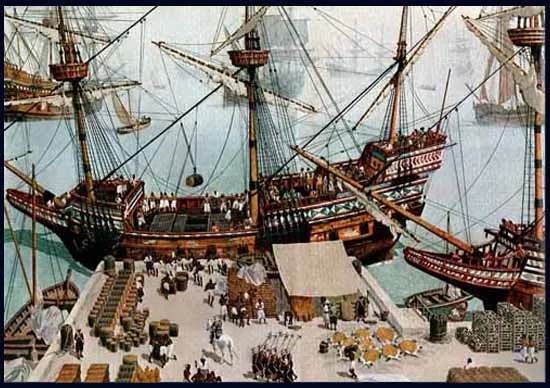
Miss Alonzo belongs, this woman, to Strand’s country and not to Stevens’s. She stands in the freakish heat of a sacrificial, sacramental Manila, the hard real noon of poverty and dust, where things are what they are and cost what they cost and the crucifix is not a figure of speech. She does not stand in the tranquil and beautifully sunsetted aesthetics of Stevens’ Key West, where the lights are lovely and master nothing and the order is a fiction the orderer is too honest to mistake for true. The distance between those two shores is the distance between an idea of order and an incarnation of one, and that distance is the whole difference between the two poets, and between the two centuries they stand at the border of, and between the two ways a man may meet the indifferent sea: by raging to impose a pattern on it that he knows will not hold, or by loving a real thing set down in front of him and letting it carry him toward the order no rage imposes. Abby Alonzo is our race finite but redeemed by another.
This is the answer the whole 20th Century, which Abby knew not of and was unable to give itself, and it is not a clever answer or a new one; it is the oldest answer there is, it was always available, and the rage for order was in some part a long and brilliant refusal to stoop and pick it up. A creature does not have to make the world in order to mean something in it. She has only to be what she is, a real good really loved, and to let the love run on past her toward its source, the way light runs past the thing it falls on and goes on toward the eye. Stevens could not allow himself the move, because to let the love run past the beloved toward a source is to confess a source, and that confession was the one thing his honesty would not let him counterfeit but his pride would not let him make. Strand spent thirty years emptying the room precisely so that, at the very end, there might be space in it for exactly this, a someone who arrives, who is known by name, who is glad. The hall of souls he kept furnishing in the dark was never empty after all. He was making it ready: “let it be soon.”
I will confess, here at the end, that before the writing of this I flirted with Fernandez myself, the summoned critic, the ghost who haunts a fleeting and waif-like place because the place has lost its Author and drifts now parentless on the tide, an orphan order with no one above it to ground the demarcations it keeps trying to draw. It is an attractive pose. It is the house style of the age. And it is false, and I put it down. We are Easter people, and the ghost takes off the sheet and turns out to be a woman, a life-giver, with a name who is our own species, finite but unbounded.
Ramon Fernandez is futile and ephemeral and, if he never repented of Doriot, damned. Abby is none of these, because she declined the rage for order in favor of the only thing that ever once answered the sea, which is to love a created good rightly and let it point past itself, the love of the creature that is, all the way down and told as slant as a man can bear to tell it, the love of the Creator.
She is the new artificer of my world, this created and uncreating woman, and my world, as Strand himself might have written it, leaning back and stroking his beard, turns out in the end to be the whole world. The blossom in the Kyoto garden is beautiful, and it falls, and the falling is the whole of what it has to give. The woman on the pier is beautiful and will not finally fall, because she is held; and the sea behind her is held; and so, it may be, was the proud dying poet in the Hartford ward with the priest’s thumb at his wrist, and the other poet too in his furnished and bearded dark, both of them reaching at the very last past the unbelief they had professed so long and so well. Abby and her new Christian Race edges toward the order that no rage of ours imposes and of which no death is the mother, the order that was there before the water was divided from the water and will be there when the freakish heat has burned the last of our futile human demarcations away. That is the truth I promised to tell. I will let the dawn come up now over the bay, and say the rest itself. The rest is not silence.

[1]The framing is deliberately compressed. The 1565 expedition of Miguel López de Legazpi established the first permanent Spanish settlement in the Philippines at Cebu, not Manila, which became the Spanish capital only in 1571; the Augustinian friar and navigator Andrés de Urdaneta sailed with that expedition and in the same year discovered the eastward return route across the Pacific, the tornaviaje, that made the Manila galleon trade possible. The epigraph is from Gemelli Careri’s Giro del Mondo (1699–1700), the record of a traveler who crossed on the galleon himself. The conflation of bay, date, and beloved is the author’s, and is meant.
[2]Wallace Stevens, “The Idea of Order at Key West,” first published 1934, collected in Ideas of Order (1936). On the poem’s music and its rage for order see Helen Vendler, On Extended Wings, and Harold Bloom, Wallace Stevens: The Poems of Our Climate.
[3]Stevens, “Sunday Morning,” in Harmonium (1923). The aphorism on fiction is from the “Adagia” in Opus Posthumous.
[4]Ramón Fernández (1894–1944), critic associated with the Nouvelle Revue Française, later a member of Jacques Doriot’s Parti Populaire Français and a collaborator under the Occupation. Stevens insisted in correspondence that he had combined two common Spanish names and intended no reference to any living man. The reader may weigh the disclaimer against the coincidence.
[5]C. S. Lewis, “De Futilitate,” a wartime address collected in Christian Reflections, ed. Walter Hooper (1967).
[6]Blizzard of One (Alfred A. Knopf, 1998) was awarded the Pulitzer Prize for Poetry in 1999. The Brentano String Quartet’s first violinist, Mark Steinberg, selected Strand for the quartet’s commissions after reading the book, wanting a voice “not convoluted… but profound underneath.”
[7]“Two de Chiricos,” in Blizzard of One; cf. Twelfth Night II.iv. The exchange recounted here is from the author’s own correspondence with Strand and is offered as testimony, not as documented record.
[8]“Poem After the Seven Last Words,” commissioned by the Brentano String Quartet to be read between the movements of Haydn’s The Seven Last Words of Christ (Op. 51), collected in Man and Camel (2006). Strand’s own note records that the sequence draws heavily on the Gospel of Thomas.
9 ibid.
[10]Richard Wilbur, “Love Calls Us to the Things of This World,” in Things of This World (1956). The recollection of Professor Benthall’s correspondence is, again, the author’s.
[11]The account derives from Fr. Arthur Hanley, chaplain of St. Francis Hospital, Hartford, in a 1977 letter to Professor Janet McCann, portions of which appear in Peter Brazeau, Parts of a World: Wallace Stevens Remembered (1983). It is disputed. Stevens’s daughter, Holly Stevens, rejected it, and Professor Helen Vendler, granting the priest’s sincerity, speculated that the story must have been a memory recovered more than twenty years after the fact, for no baptismal record survives. In fairness to Hanley the following should be set on the other pan of the scale. His recollection is circumstantial and theological rather than the vague mumble of a forgetful man: he reports that Stevens raised the problem of hell as a sustained and serious objection that the two of them worked through over many meetings, that the poet had for years found peace sitting in Catholic churches, and that he had corresponded with the poet-nun Sister Madeleva, who urged him toward the fold. That does not read as anyone’s supposed senility recovered late, nor Stevens’; it reads Stevens as a serious man receiving serious answers from a priest in full command of his own faculties. The absence of a record is real and is conceded. So is the daughter’s interest: an unbroken atheism was no small part of the poet’s august standing in the English departments that canonized him, and there are only so many honorary degrees that Stevens, whether or not he had converted, could have carried home. I offer that last with the eyebrow raised and at once half lowered, for a daughter has decent grounds to doubt a deathbed with no paper behind it, and I will not press the cheaper motive past a wink.
[12]On Greene’s lifelong ambivalence see his own occasional self-description as a “Catholic agnostic.” The Voltaire deathbed sayings are various and unreliable and are repeated here as legend. The Marchmain scene is in Evelyn Waugh, Brideshead Revisited (1945); the image of the line and the twitch upon the thread is Chesterton’s, from the Father Brown story “The Queer Feet” (The Innocence of Father Brown, 1911), and supplies Waugh his title for the novel’s final book.